
Filming Batwa Pygmies in Uganda
A Complete Guide to Documenting One of Africa’s Oldest Indigenous Cultures
Filming the Batwa people in Uganda offers a rare opportunity to document one of Africa’s oldest surviving indigenous communities. Their rich traditions, deep connection to nature, and remarkable cultural heritage provide powerful storytelling opportunities for filmmakers, documentary producers, and journalists. However, capturing their story requires more than simply bringing cameras into a community. It demands respect, cultural sensitivity, careful planning, and adherence to Uganda’s legal requirements.
As of 2026, filmmakers interested in documenting Batwa culture must navigate permit procedures, work closely with local communities, and prepare for the unique challenges of filming in remote mountain forests. With proper preparation, filmmakers can create meaningful productions that not only preserve cultural heritage but also contribute positively to the communities involved.
Understanding the Batwa People
The Batwa are among the oldest indigenous communities in the Great Lakes region of Africa. For thousands of years, they lived as hunter-gatherers in the forests of southwestern Uganda, Rwanda, Burundi, and eastern Democratic Republic of Congo. Their lives revolved around the forest, which provided food, medicine, shelter, and spiritual significance.
Over generations, the Batwa developed extensive knowledge of wildlife, medicinal plants, and sustainable forest living. Their culture was deeply intertwined with nature, and their survival depended on maintaining harmony with the environment.
However, dramatic changes occurred during the early 1990s when large areas of forest were gazetted as national parks and protected conservation areas. As a result, many Batwa communities were displaced from their ancestral lands. Without access to the forests that had sustained them for centuries, they faced significant social and economic challenges.
Today, cultural tourism initiatives and heritage programs provide opportunities for the Batwa to preserve their traditions while generating income through storytelling, performances, and cultural demonstrations.
Best Locations for Filming Batwa Communities
Mgahinga Gorilla National Park
Mgahinga Gorilla National Park remains one of the most authentic locations for documenting traditional Batwa culture. The renowned Batwa Cultural Trail allows visitors and filmmakers to experience the forest through the eyes of Batwa elders who once called it home.
During the trail, elders demonstrate traditional hunting techniques using bows and arrows, explain methods of gathering wild honey, identify medicinal plants, and share knowledge about edible forest foods. These activities offer valuable visual content while illustrating the Batwa’s extraordinary relationship with their environment.
One of the most compelling highlights of the experience is Garama Cave. This sacred site once served as a gathering place and shelter for Batwa families. Inside the cave, elders recount oral histories, perform traditional songs, and demonstrate ancient fire-making techniques. The dramatic setting creates a powerful backdrop for storytelling and cultural documentation.
Bwindi Impenetrable National Park
Known globally for mountain gorilla conservation, Bwindi Impenetrable National Park also provides opportunities to film Batwa communities living around its boundaries.
The park’s sectors, including Buhoma, Rushaga, Ruhija, and Nkuringo, each offer unique perspectives on Batwa life. Filmmakers can document both traditional cultural practices and the modern realities of communities adapting to life outside the forest.
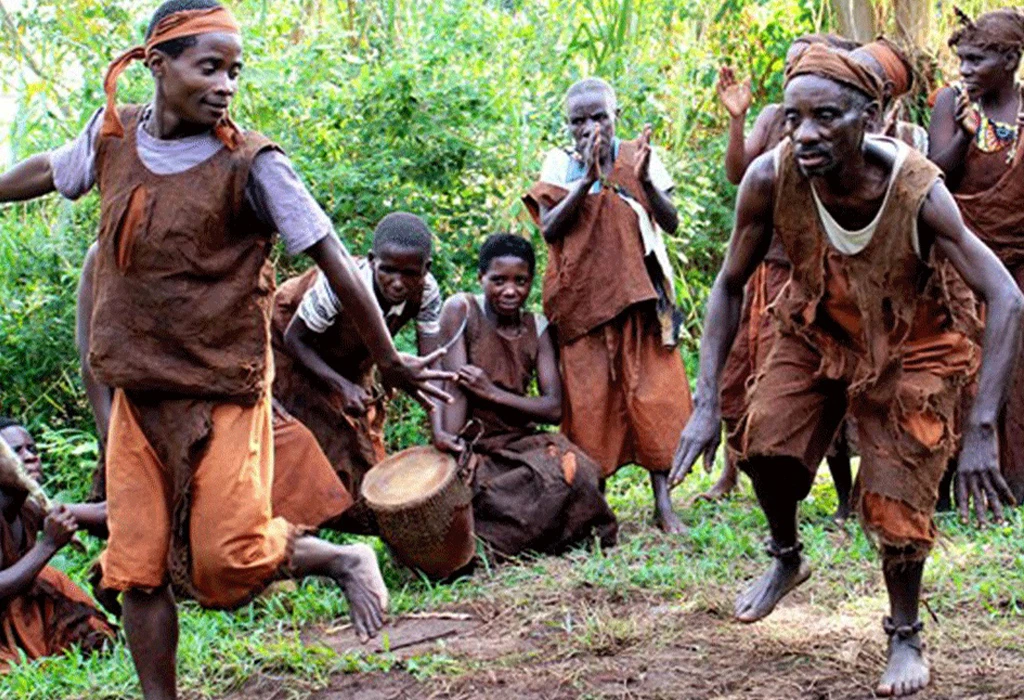
In Buhoma, cultural programs highlight educational initiatives, healthcare improvements, housing projects, and community development efforts. These experiences allow filmmakers to present a balanced narrative that explores both cultural preservation and contemporary challenges.
The dense rainforest, rolling hills, and mist-covered landscapes of Bwindi create visually stunning scenes, making the area ideal for documentary production.
Lake Bunyonyi and Echuya Forest Reserve
Lake Bunyonyi offers a different perspective on Batwa life. Some Batwa families now live on the lake’s islands or along its scenic shores. The breathtaking landscape of terraced hills, calm waters, and traditional canoes provides excellent cinematic opportunities.
Nearby Echuya Forest Reserve introduces filmmakers to another important ecosystem where Batwa communities continue to interact with bamboo forests. The collection and use of bamboo remain important elements of daily life and cultural practice, offering unique storytelling possibilities.
Permits and Legal Requirements
Media Accreditation
All foreign film crew members must obtain media accreditation before filming in Uganda. This requirement applies to directors, producers, camera operators, journalists, sound technicians, and photographers.
Applications typically require personal details, professional credentials, project descriptions, and intended filming locations. Because processing may take several days, it is advisable to begin applications well before arriving in Uganda.
Wildlife Authority Filming Permits
When filming takes place inside national parks or protected areas, additional filming permits are required. Authorities generally request detailed information about filming dates, crew size, equipment, and project objectives.
Depending on the nature of the production, monitoring fees and activity-related filming charges may also apply. In some cases, park representatives accompany film crews to ensure compliance with conservation guidelines and environmental regulations.
Equipment Importation
Professional filming equipment entering Uganda must be declared through customs procedures. Cameras, drones, lenses, lighting systems, microphones, and other production gear should be documented upon arrival.
Temporary import arrangements typically allow equipment to enter the country without full import taxation, provided it leaves with the crew at the conclusion of filming. Proper documentation helps avoid delays and complications at entry points.
Budgeting for a Batwa Film Project
A successful production requires more than permit fees alone. Filmmakers should allocate funds for community participation, local guides, interpreters, transportation, accommodation, and logistical support.
Community access fees often help compensate participants for their time and ensure cultural programs benefit directly from filming activities. These contributions support community development while fostering positive relationships between filmmakers and residents.
Interpreter services are particularly valuable because many Batwa elders communicate primarily in local languages. Effective translation helps preserve the authenticity of interviews and ensures meaningful interactions.
Transportation costs can also be high due to the remote nature of many filming locations. Planning these expenses contributes to smoother production schedules.
Ethical Considerations When Filming Batwa Communities
Ethics should remain at the center of every filming project involving indigenous communities. The Batwa have endured decades of displacement, marginalization, and cultural loss. Consequently, filmmakers carry an important responsibility to portray their stories with dignity and respect.
Obtaining informed consent is essential before recording interviews, ceremonies, performances, or daily activities. Participants should clearly understand how footage will be used and distributed.
Respect for cultural boundaries is equally important. Certain traditions, sacred practices, or community discussions may not be appropriate for filming. Honoring these boundaries helps build trust and demonstrates genuine respect for cultural values.
Fair compensation should also be prioritized. Community members contribute knowledge, time, and cultural expertise that enrich the production. Recognizing these contributions strengthens partnerships and promotes sustainable cultural tourism.
Above all, filmmakers should avoid stereotypes that portray the Batwa solely through the lens of poverty or historical hardship. Balanced storytelling acknowledges challenges while celebrating resilience, culture, knowledge, and identity.
Technical Preparation for Forest Filming
Filming in Uganda’s mountainous forests requires careful technical preparation. Weather conditions can change rapidly, and heavy rain may occur even during drier months.
Protective equipment such as waterproof camera covers and weather-resistant storage cases is highly recommended. Moisture-control accessories help safeguard sensitive electronics from humidity.
Because many filming locations involve steep trails and uneven terrain, stabilization equipment becomes particularly useful. Gimbals, monopods, and lightweight support systems can improve footage quality while reducing physical strain.
Reliable power solutions are equally important. Extra batteries, portable charging systems, and solar chargers help ensure uninterrupted filming in remote areas where electricity may be limited.
Sound recording also requires special attention. Forest environments contain diverse natural sounds, including birds, insects, wind, and flowing water. High-quality microphones and wind protection systems help capture clear audio while preserving the atmosphere of the environment.
Best Time of Year for Filming
The most favorable filming conditions generally occur during Uganda’s two dry seasons.
The first dry season runs from June through September, while the second extends from December through February. During these periods, trails are more accessible, visibility improves, and weather conditions are generally more predictable.
These months also provide better opportunities for transporting equipment and conducting interviews without frequent interruptions from rain.
Although the rainy seasons present logistical challenges, they can also produce dramatic scenery, lush vegetation, and atmospheric footage that may enhance certain documentary projects.
Conclusion
Filming the Batwa people in Uganda presents an extraordinary opportunity to document one of Africa’s most remarkable indigenous cultures. Their deep historical connection to the forest, rich traditions, and enduring resilience offer compelling stories that deserve thoughtful and respectful representation.
Successful projects require careful planning, legal compliance, ethical engagement, and genuine collaboration with communities. When approached responsibly, filmmaking can help preserve cultural heritage, raise awareness of important social issues, and create lasting benefits for the Batwa people while sharing their story with audiences around the world.