
Uganda Gorilla Trekking Safaris and Tours
Mgahinga Gorilla National Park is one of Uganda’s most remarkable destinations for mountain gorilla trekking, golden monkey tracking, hiking, wildlife viewing, and cultural experiences. Although it is Uganda’s smallest national park, its dramatic volcanic landscape and rich biodiversity make it an important part of the country’s tourism industry.
Located in southwestern Uganda, Mgahinga sits close to the borders of Uganda, Rwanda, and the Democratic Republic of Congo. The park forms part of the larger Virunga Conservation Area, which also includes Volcanoes National Park in Rwanda and Virunga National Park in the Democratic Republic of Congo.
For travellers planning a Uganda safari, Mgahinga offers an opportunity to explore mountain forests, climb beautiful volcanic peaks, encounter endangered mountain gorillas, and learn about the cultural heritage of the Batwa people.
Experiya Tour Company provides guided safari arrangements for travellers interested in exploring Mgahinga Gorilla National Park and other destinations across Uganda.
Where Is Mgahinga Gorilla National Park Located?
Mgahinga Gorilla National Park lies in Bufumbira County, Kisoro District, in the extreme southwestern corner of Uganda. The park sits along the international borders of Uganda, Rwanda, and the Democratic Republic of Congo.
From Kisoro town, the park is approximately 14 kilometres by road. Travellers coming from Kampala generally pass through Kabale and Kisoro before reaching the park. The journey covers roughly 510 kilometres by road, although travel time can vary depending on road conditions, traffic, and stops along the way.
Because of its location, Mgahinga also works well for travellers combining Uganda with Rwanda. Visitors can access the region from Kigali and continue into southwestern Uganda, making it possible to design a multi-country East African safari.
About Mgahinga Gorilla National Park
Mgahinga covers approximately 34 square kilometres, making it the smallest of Uganda’s national parks. Despite its limited size, the park contains a remarkable variety of habitats, ranging from dense forests to high-altitude vegetation on the slopes of the Virunga volcanoes.
The park is part of the approximately 434-square-kilometre Virunga Conservation Area. This larger ecosystem crosses the borders of Uganda, Rwanda, and the Democratic Republic of Congo.
Most visitors associate Mgahinga with mountain gorillas. However, the park offers much more than gorilla trekking. Visitors can also track golden monkeys, hike volcanic mountains, enjoy birdwatching, explore forest habitats, and take part in cultural experiences.
Mountain Gorillas in Mgahinga
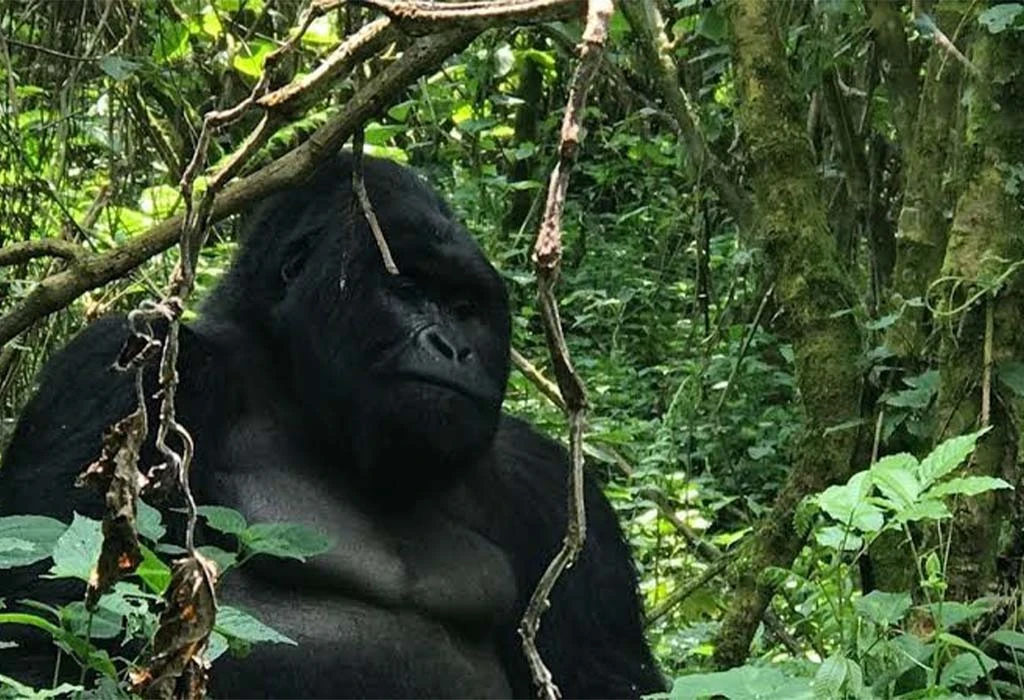
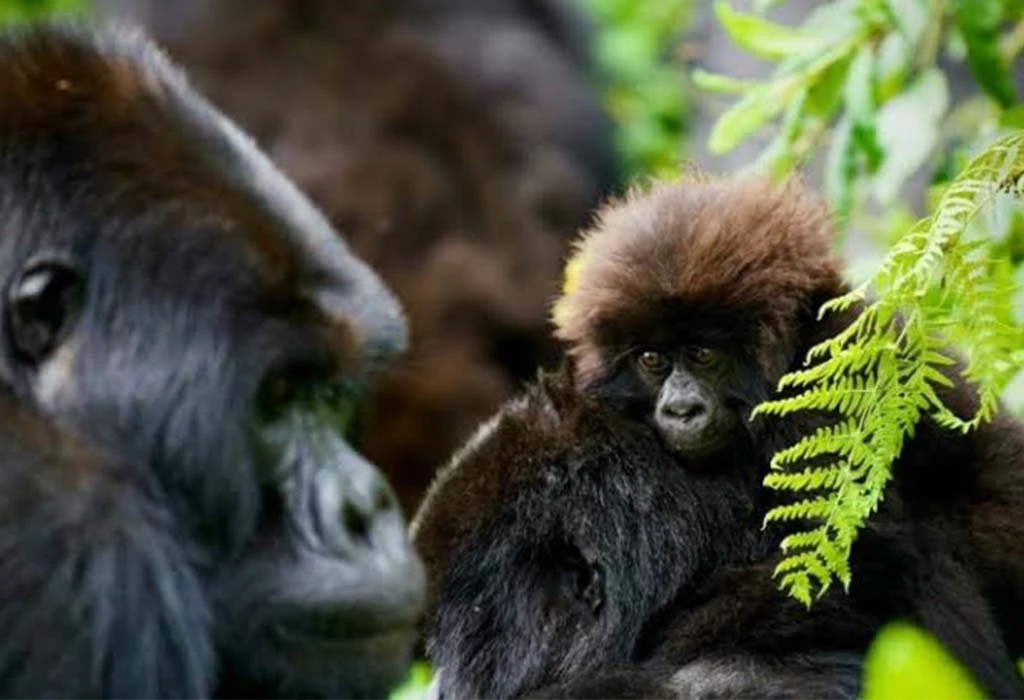
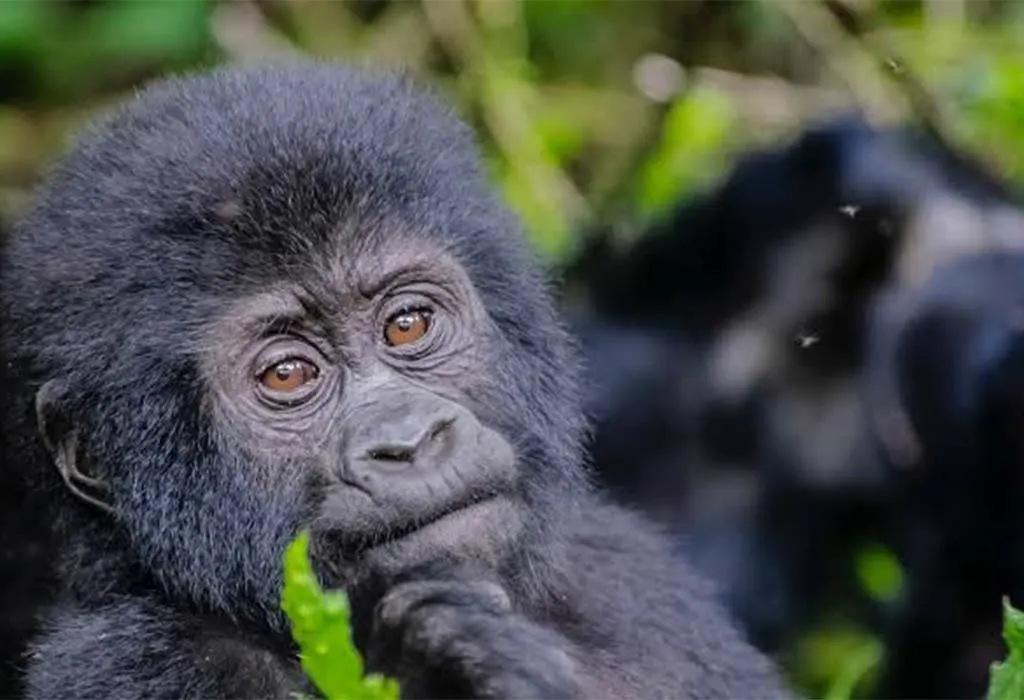
Mountain gorilla trekking remains one of the main reasons travellers visit Mgahinga. The park protects part of the critically endangered mountain gorilla population that lives within the Virunga mountain range.
Gorilla trekking involves walking through the forest with trained guides and trackers in search of a habituated gorilla family. Once the group is located, visitors spend a limited amount of time observing the gorillas while following strict conservation guidelines.
The experience can be physically demanding because the forest grows on steep volcanic slopes. Nevertheless, the opportunity to watch gorillas feeding, resting, grooming, and interacting with one another makes the trek a memorable wildlife experience.
Before travelling, visitors should obtain a valid gorilla trekking permit and follow the regulations provided by the Uganda Wildlife Authority. Experiya Tour Company can assist travellers with planning the trekking arrangements as part of a wider Uganda safari.
Golden Monkey Tracking
In addition to gorilla trekking, Mgahinga is one of the important destinations for golden monkey tracking in Uganda.
Golden monkeys are distinctive primates known for their bright golden-orange fur and lively behaviour. They live within the bamboo and forest zones of the Virunga mountains.
Golden monkey tracking provides a different experience from gorilla trekking. The monkeys are generally more active, and visitors may follow them as they move through the forest canopy and bamboo vegetation.
Therefore, travellers who have enough time can combine gorilla trekking and golden monkey tracking during their visit to Mgahinga.
Wildlife in Mgahinga
Although Mgahinga is best known for its primates and mountain scenery, the park also supports a variety of other wildlife.
Recorded species include forest elephants, buffaloes, giant forest hogs, bushbucks, bushpigs, black-fronted duikers, golden cats, side-striped jackals, and South African porcupines.
However, visitors should not expect to see all these animals during a short visit. Dense vegetation and the mountainous terrain can make wildlife difficult to spot. Instead, the value of Mgahinga lies in its combination of forest wildlife, primates, dramatic scenery, and outdoor adventures.
Birds of Mgahinga Gorilla National Park
Mgahinga also attracts birdwatchers because of its location within the Albertine Rift.
More than 180 bird species have been recorded in the park, including several Albertine Rift endemic species. Some notable birds include the Rwenzori turaco, Rwenzori batis, dusky crimsonwing, and regal sunbird.
Birdwatching is particularly rewarding for visitors who enjoy exploring forest habitats. Experienced guides can help identify birds by their calls, colours, behaviour, and preferred habitats.
Consequently, birdwatching can easily complement gorilla trekking or hiking for travellers who want to experience more of the park’s biodiversity.
The Three Virunga Volcanoes
One of Mgahinga’s most impressive features is its volcanic landscape. The park protects the Ugandan slopes of three Virunga volcanoes: Mount Sabinyo, Mount Gahinga, and Mount Muhabura.
Mount Sabinyo rises to approximately 3,645 metres above sea level. Its rugged summit provides a challenging hiking experience for adventurous visitors.
Mount Gahinga reaches about 3,474 metres. Its slopes contain bamboo forests and other vegetation zones that change as the altitude increases.
Mount Muhabura is the tallest of the three, rising to approximately 4,127 metres. The climb requires good physical preparation, but hikers can enjoy spectacular views across the surrounding landscape when weather conditions are favourable.
Because the mountains rise sharply above the surrounding countryside, hiking in Mgahinga provides a strong contrast to ordinary forest walks.
Hiking and Mountain Climbing
Mgahinga offers excellent opportunities for mountain hiking. As visitors climb higher, the vegetation changes from forest and bamboo zones to afro-alpine vegetation around the upper slopes.
The terrain can become steep and challenging, so hikers need appropriate footwear, sufficient drinking water, suitable clothing, and a reasonable level of physical fitness. Local guides accompany hikers and provide assistance along the trails.
The experience is not only about reaching the summit. Along the way, hikers can enjoy changing landscapes, volcanic formations, forest vegetation, and views across Uganda and the neighbouring countries.
The Batwa Cultural Heritage
Mgahinga also has deep cultural importance for the Batwa people, who traditionally lived in the forests of the Albertine Rift.
The Batwa developed extensive knowledge of the forest environment and depended on hunting, gathering, medicinal plants, and other forest resources for their livelihoods.
Today, cultural experiences provide visitors with an opportunity to learn about Batwa traditions, forest knowledge, music, dance, food, and historical connections with the landscape.
A cultural visit can therefore add an important human dimension to a gorilla or hiking safari in Mgahinga.
History of Mgahinga National Park
The conservation history of the Virunga mountains goes back to the early twentieth century. In 1925, Belgian authorities established a protected area covering part of the mountain range in what is now the Democratic Republic of Congo and Rwanda.
The Ugandan section later became a game sanctuary in 1930 under British administration. In 1991, the area was officially upgraded to national park status and became known as Mgahinga Gorilla National Park.
Today, conservation efforts focus on protecting mountain gorillas, golden monkeys, forest habitats, and the wider ecosystem while supporting responsible tourism and local communities.
What Does the Name Mgahinga Mean?
The name Mgahinga comes from Mount Gahinga, one of the three volcanoes protected within the park.
The word “Gahinga” refers to piles of volcanic stones that farmers traditionally cleared from their cultivated fields. The name therefore reflects the close relationship between the volcanic landscape and local agricultural practices.
When Should You Visit Mgahinga?
Mgahinga can be visited throughout the year. However, weather conditions can influence trekking and hiking experiences because the park lies in a mountainous region.
The drier periods are often preferred by travellers because trails can become easier to navigate. Nevertheless, rain can occur at any time, and visitors should prepare for wet conditions regardless of the season.
Gorilla trekking remains possible during rainy periods, and the forest can look particularly lush and vibrant after rainfall.
What Should You Wear for Gorilla Trekking?
Visitors should prepare carefully for the conditions in Mgahinga. Sturdy waterproof hiking boots are important because trails can become muddy and slippery.
Long trousers and a long-sleeved shirt can provide protection from vegetation and insects. A waterproof jacket or poncho is also useful because mountain weather can change quickly.
Travellers should also consider carrying gardening gloves, gaiters, a hat, drinking water, sunscreen, and a small backpack. Because trekking can last several hours, comfortable and practical clothing is more important than fashion.
Planning Your Mgahinga Gorilla Safari
A trip to Mgahinga can be designed around gorilla trekking, golden monkey tracking, mountain hiking, birdwatching, cultural experiences, or a combination of these activities.
Travellers can also combine Mgahinga with destinations such as Bwindi Impenetrable National Park, Queen Elizabeth National Park, Lake Bunyonyi, or other attractions in southwestern Uganda.
Experiya Tour Company can help organize transport, accommodation, gorilla trekking permits, guided activities, and a safari itinerary suited to the traveller’s available time and interests.
Mgahinga may be Uganda’s smallest national park, but its combination of mountain gorillas, golden monkeys, volcanic peaks, forests, birds, wildlife, and cultural heritage makes it a destination worth exploring. Whether you are visiting for gorilla trekking or looking for a wider adventure in southwestern Uganda, Mgahinga offers a rewarding experience surrounded by the dramatic landscapes of the Virunga mountains.