
Which Uganda Parks Are Best for Birdwatching Safaris?
Uganda stands among Africa’s finest birdwatching destinations. With more than 1,080 recorded bird species spread across forests, wetlands, savannahs, mountains, and lakeshores, the country offers extraordinary opportunities for bird lovers from around the world. Whether you are an experienced birder chasing rare species or a beginner hoping to enjoy colorful birdlife during a safari, Uganda delivers unforgettable sightings in nearly every region.
At Experiya Tour Company, we guide travelers through Uganda’s most rewarding birding locations while combining wildlife, culture, and scenic landscapes into one remarkable journey. From the mysterious shoebill stork hiding in papyrus swamps to the vibrant great blue turaco gliding through ancient forests, Uganda rewards birders with diversity and excitement throughout the year.
Why Uganda Is a Birdwatcher’s Paradise
Uganda’s exceptional bird diversity comes from its unique geographical position. The country lies at the meeting point of the East African savannah and the Central African rainforest. As a result, birders can spot both savannah species and rainforest specialists within a single safari.
In addition, Uganda contains a wide variety of ecosystems packed into a relatively compact area. Dense tropical forests shelter Albertine Rift endemics, while wetlands support aquatic species and open plains attract raptors, bustards, and ground birds. This ecological richness makes Uganda one of the best birdwatching destinations in Africa.
Moreover, Uganda hosts some of the continent’s most sought-after birds. Travelers regularly search for iconic species such as the shoebill stork, African green broadbill, green-breasted pitta, great blue turaco, and Shelley’s crimsonwing. Many birders also appreciate Uganda’s high concentration of sunbirds, hornbills, kingfishers, bee-eaters, and barbets.
Uganda’s Most Exciting Birds to Watch
One of the greatest highlights of birdwatching in Uganda is the opportunity to encounter rare and visually stunning species in their natural habitats.
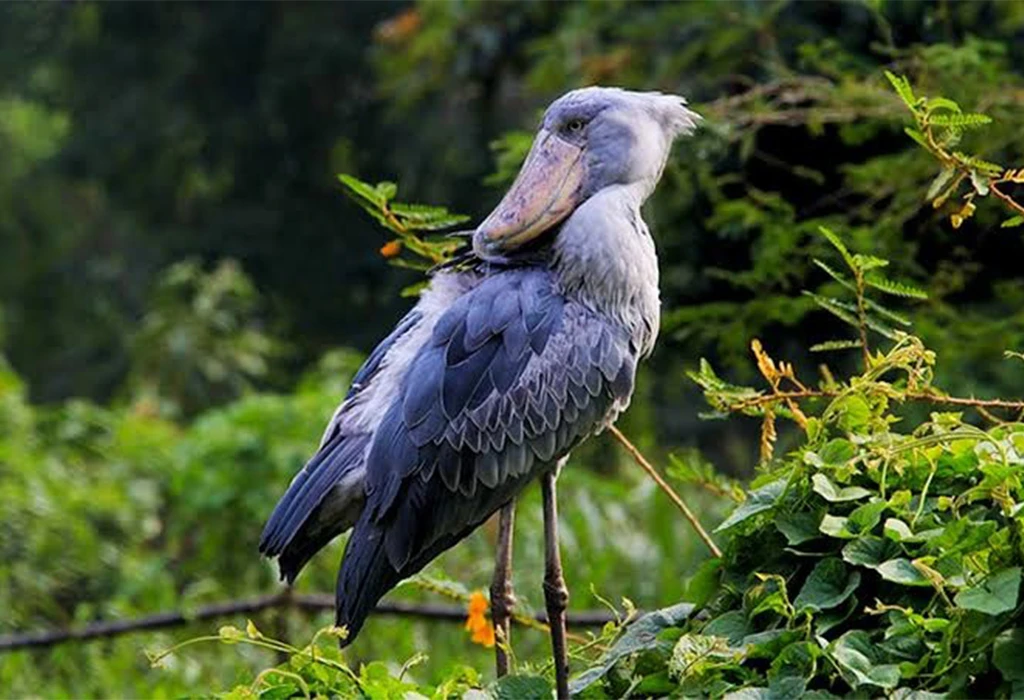
The shoebill stork remains Uganda’s most famous bird. This prehistoric-looking species moves slowly through papyrus wetlands and marshes, especially in Mabamba Bay and the Nile Delta in Murchison Falls National Park. Its enormous shoe-shaped bill and calm movements make it one of Africa’s most unforgettable sightings.
The great blue turaco also fascinates visitors with its brilliant blue feathers and graceful movement through the forest canopy. Although it rarely flies long distances, it glides elegantly between trees and often calls loudly from hidden branches.
Deep within Uganda’s montane forests, birders search for the rare African green broadbill. This endangered species carries soft green plumage with a distinctive blue throat and survives mainly in the Albertine Rift forests.
Another highly desired species is the green-breasted pitta, a secretive bird known for its vivid green chest and elusive behavior in lowland forests. Spotting one often becomes the highlight of a birding safari.
Uganda also hosts remarkable species such as Doherty’s bushshrike, the standard-winged nightjar, the black-breasted barbet, Shelley’s crimsonwing, and the bar-tailed trogon. Each bird contributes to Uganda’s reputation as a dream destination for passionate birdwatchers.
Queen Elizabeth National Park
Queen Elizabeth National Park ranks among the best birdwatching destinations in Africa. The park contains over 600 bird species, giving it one of the highest bird counts of any protected area on the continent.
The park’s varied habitats include savannah grasslands, crater lakes, wetlands, forests, and the famous Kazinga Channel. Because of this diversity, birders enjoy excellent opportunities throughout the park.
A boat safari along the Kazinga Channel offers close-up views of water birds and raptors. African skimmers, great white pelicans, fish eagles, cormorants, and kingfishers frequently appear along the shoreline. Meanwhile, the papyrus swamps support species such as the papyrus gonolek and papyrus canary.
In the open plains, visitors often spot martial eagles, vultures, and other birds of prey soaring above the savannah.
Murchison Falls National Park
Murchison Falls National Park combines dramatic scenery with exceptional birdlife. Uganda’s largest national park protects more than 450 bird species across savannah, riverine woodland, and wetland habitats.
The Nile Delta stands out as one of the best places in Africa to search for the shoebill stork. Experiya Tour Company organizes dedicated boat trips that allow birders to explore the delta’s papyrus channels in search of this legendary species.
Besides the shoebill, the park hosts Abyssinian ground hornbills, giant kingfishers, goliath herons, bee-eaters, and saddle-billed storks. Along the riverbanks, crocodiles and hippos create dramatic wildlife scenes that enrich the birding experience.
Bwindi Impenetrable National Park
Bwindi Impenetrable National Park is internationally recognized as one of Africa’s premier birding forests. The African Bird Club once named it the continent’s best birdwatching site due to its remarkable biodiversity.
This ancient rainforest shelters 23 of Uganda’s 24 Albertine Rift endemic bird species. Consequently, serious birders consider Bwindi essential for any East African birding safari.
The famous Mubwindi Swamp Trail offers opportunities to search for highly localized species such as the African green broadbill, Grauer’s rush warbler, chestnut-throated apalis, and Rwenzori batis.
In addition to birding, travelers can combine their safari with gorilla trekking, creating one of the most rewarding wildlife experiences in Africa.
Kibale National Park
Kibale National Park is widely known for chimpanzee trekking, yet it also supports over 375 bird species within its dense evergreen forests.
Birders often explore Kibale’s trails early in the morning when forest species become most active. The park provides excellent opportunities to spot the green-breasted pitta, black bee-eater, blue-breasted kingfisher, and African pitta.
Because Kibale combines primates and birdlife so effectively, many travelers include it in longer Uganda safari itineraries.
Lake Mburo National Park
Lake Mburo National Park offers a completely different birding environment dominated by acacia woodland and wetland habitats. The park hosts more than 315 bird species and remains Uganda’s best location for acacia-associated birds.
Most importantly, Lake Mburo provides the country’s most reliable sightings of the rare red-faced barbet. Birders also search for the African finfoot, papyrus yellow warbler, and bare-faced go-away-bird around the park’s lakes and woodlands.
Furthermore, Lake Mburo’s compact size makes it ideal for short birdwatching safaris from Kampala or Entebbe.
Semuliki National Park
Semuliki National Park protects a unique lowland rainforest connected to the Congo Basin ecosystem. This habitat supports several Guinea-Congo biome species rarely found elsewhere in East Africa.
The park attracts dedicated birders searching for specialties such as the Nkulengu rail, piping hornbill, and great blue turaco. Since many of these birds occur nowhere else in Uganda, Semuliki remains an essential stop for comprehensive birding expeditions.
Important Wetland Birding Sites
Beyond the national parks, Uganda’s wetlands provide world-class birdwatching opportunities.
Mabamba Bay Wetland near Entebbe remains the most reliable location for shoebill tracking. Local guides paddle visitors through narrow papyrus channels in traditional canoes while searching for this elusive species.
Meanwhile, Lutembe Bay on Lake Victoria serves as an important migratory bird sanctuary. Between October and March, millions of Palearctic migrants stop here during their seasonal journeys.
Best Time for Birdwatching in Uganda
Uganda offers excellent birdwatching throughout the year. However, the dry seasons from June to September and December to February provide the best conditions for forest walks, photography, and easier bird sightings.
Additionally, migratory birds arrive between November and April, increasing the diversity of species across the country.
For travelers hoping to maximize both resident and migratory sightings, Experiya Tour Company recommends visiting between November and February.
What to Pack for a Uganda Birding Safari
Preparation greatly improves your birdwatching experience. Travelers should carry quality binoculars, preferably 8×42 or 10×42, for clear viewing in forests and wetlands. A reliable East African bird guidebook and a notebook for recording sightings also prove helpful.
Comfortable hiking boots, lightweight neutral-colored clothing, and waterproof gear are essential, especially for rainforest and swamp excursions. In addition, bird photographers should bring cameras with zoom lenses for detailed wildlife shots.
Finally, insect repellent, sunscreen, reusable water bottles, and bird identification apps like Merlin Bird ID can make your safari more comfortable and rewarding.
Discover Uganda’s Birdlife With Experiya Tour Company
Uganda offers one of Africa’s richest birdwatching experiences, combining extraordinary biodiversity with breathtaking landscapes and welcoming local culture. From the wetlands of Mabamba to the ancient forests of Bwindi, every destination introduces new species and unforgettable encounters.
At Experiya Tour Company, we design personalized birding safaris that match your interests, pace, and experience level. Whether you dream of spotting the shoebill stork, exploring Albertine Rift forests, or combining birding with gorilla trekking, Uganda promises an adventure filled with color, sound, and discovery.