
Great Wildebeest Migration in Tanzania and Kenya
The Great Wildebeest Migration is one of Africa’s most spectacular wildlife experiences. Every year, more than a million wildebeests, together with hundreds of thousands of zebras, gazelles, elands, and other herbivores, move across the plains of Tanzania and Kenya in search of fresh grass and water. This remarkable natural cycle takes place mainly between the Serengeti National Park in Tanzania and the Maasai Mara National Reserve in Kenya.
The migration follows seasonal rainfall patterns, although the exact movement of the herds can vary from year to year. As a result, travelers planning a migration safari need to understand the different stages of the cycle to choose the most suitable time and location.
Animals That Take Part in the Great Migration
Wildebeests form the largest part of the migrating herds. They are herbivorous members of the antelope family and are commonly known as gnus. During the migration, enormous herds spread across the Serengeti and Maasai Mara, creating unforgettable scenes as they move through the grasslands.
Alongside the wildebeests are large numbers of zebras and antelopes, including Thomson’s gazelles, Grant’s gazelles, impalas, and elands. Their movement provides an important food source for predators such as lions, leopards, cheetahs, hyenas, and crocodiles.
Consequently, the migration is not only about watching animals move from one destination to another. It is also an opportunity to witness predator-prey interactions, dramatic river crossings, breeding activity, and the struggles that animals face throughout their journey.
January to March: The Calving Season
The migration begins its annual cycle in the southern Serengeti and the Ndutu area, where fresh green grass provides excellent grazing conditions. From January to March, large herds gather in these plains for the calving season.
During this period, hundreds of thousands of wildebeest calves are born. Because many females give birth within a relatively short period, the young have some protection in numbers. Nevertheless, predators such as lions, cheetahs, leopards, and hyenas take advantage of the abundance of vulnerable newborns.
Therefore, January to March is an excellent time for travelers interested in witnessing wildlife births and predator activity. The open plains also make it easier to observe large concentrations of animals.
April and May: The Migration Moves North
As the rains continue, the herds gradually leave the southern Serengeti and begin moving toward the western and central parts of the ecosystem. April and May are generally wetter months, which can make some roads muddy and challenging to navigate.
However, the rains also transform the landscape, producing fresh vegetation and water. The herds continue moving as they respond to changing grazing conditions.
Although these months may be less popular with visitors because of the weather, travelers who do not mind occasional rain can still enjoy excellent wildlife viewing and fewer crowds.
June: The Western Corridor and Grumeti River
By June, many herds have reached the western Serengeti and the Grumeti area. This period can provide some of the most dramatic scenes of the migration.
The Grumeti River presents a significant challenge for the animals. Large crocodiles wait in the water, while strong currents and steep riverbanks can make crossing difficult. At the same time, predators such as lions and hyenas remain close to the herds.
Furthermore, June can be a rewarding month for combining migration viewing with other safari experiences. Visitors may encounter elephants, buffaloes, hippos, giraffes, and numerous bird species while exploring the western Serengeti.
July to October: Northern Serengeti and Maasai Mara
From July onward, the herds continue toward the northern Serengeti and eventually enter Kenya’s Maasai Mara. This is widely regarded as one of the most exciting periods of the migration.
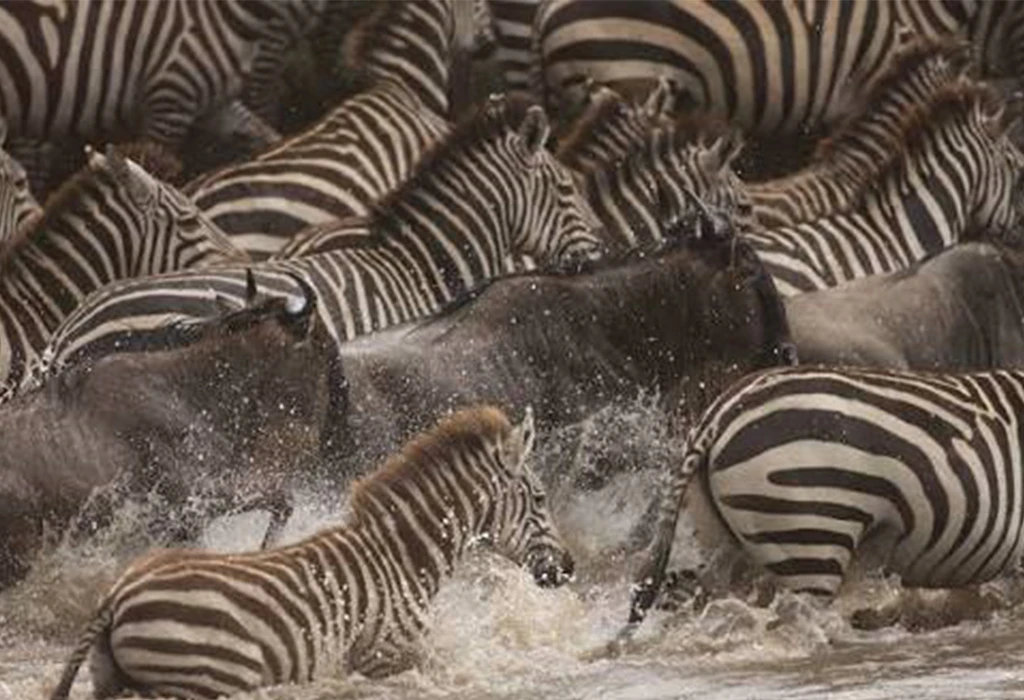
The famous Mara River crossings can occur during this period, although the exact timing and location depend on rainfall and herd movements. Thousands of animals may gather along the riverbanks before eventually entering the water.
These crossings can be unpredictable. The animals may remain on the banks for hours or even days before deciding to cross. Once they begin, the scene can become chaotic as wildebeests and zebras rush through the water while crocodiles wait for opportunities to strike.
For this reason, July to October is particularly popular with travelers seeking dramatic migration experiences.
November and December: The Herds Return South
As the short rains begin, the herds gradually leave the Maasai Mara and northern Serengeti and start moving southward. By December, many animals are once again approaching the southern Serengeti.
The cycle continues as the herds follow fresh vegetation created by seasonal rainfall. Eventually, they return to the southern plains, where the next calving season begins.
Thus, the Great Migration is not a simple journey from Tanzania to Kenya. Instead, it is a continuous circular movement across the Serengeti-Mara ecosystem.
The Mara River Crossing
The Mara River crossing is one of the most famous highlights of the Great Migration. However, it is important to understand that river crossings cannot be guaranteed on a specific date.
Large herds often gather near the river before crossing, creating an atmosphere of anticipation. When the animals finally enter the water, the crossing can be spectacular, with hundreds or thousands of wildebeests and zebras attempting to reach the opposite bank.
Crocodiles, strong currents, steep banks, and panic within the herd make the crossing dangerous. Nevertheless, the animals continue because reaching fresh grazing areas is essential for their survival.
Where to Stay During the Migration
Choosing accommodation close to the migrating herds can significantly improve the safari experience. In Tanzania, mobile camps are particularly useful because they can follow the general movement of the migration and position travelers closer to the animals.
Permanent lodges and tented camps are also available throughout the Serengeti. In Kenya, travelers can choose from luxury camps, mid-range tented camps, and more affordable accommodation around the Maasai Mara.
The best accommodation depends on the month of travel, budget, preferred level of comfort, and the area where the herds are expected to be.
Combining the Migration With Other Safari Experiences
A Great Migration safari can easily be combined with other attractions in Tanzania and Kenya. For example, travelers in Tanzania can add the Ngorongoro Conservation Area, Tarangire National Park, Lake Manyara National Park, or Mount Kilimanjaro to their itinerary.
In addition, visitors can enjoy cultural experiences with Maasai communities, hot-air balloon rides over the Serengeti, nature walks, and other wildlife activities where permitted.
Travelers visiting Kenya can combine the Maasai Mara with destinations such as Nairobi, Amboseli National Park, or other wildlife reserves depending on the length of their trip.
How to Plan Your Great Migration Safari
Planning a migration safari requires careful consideration because the herds are constantly moving. Rather than choosing a destination based solely on a particular month, travelers should consider seasonal rainfall, recent herd movements, accessibility, accommodation location, and the type of experience they want.
July to October is especially popular for travelers hoping to witness the northern migration and possible Mara River crossings. January to March, however, is ideal for those interested in the calving season.
Most importantly, travelers should remain flexible because wildlife follows natural conditions rather than a fixed timetable.
Conclusion
The Great Wildebeest Migration is a remarkable natural event that connects Tanzania’s Serengeti with Kenya’s Maasai Mara. From the birth of thousands of calves in the southern Serengeti to the dramatic river crossings farther north, every stage offers something different.
Whether you visit during the calving season, the western migration, or the famous Mara River crossing period, the experience can provide unforgettable encounters with wildlife. With careful planning and the right safari location, the Great Migration can become one of the most memorable adventures in East Africa.