
Are Walking Safaris Safe in Lake Mburo National Park?
Walking safaris in Lake Mburo National Park feel both thrilling and reassuring at the same time. I remember my first step into the open savannah no vehicle, no barriers just the quiet rhythm of nature all around me. Naturally, the question of safety crossed my mind. Yet, as the experience unfolded, it became clear that Lake Mburo is one of the safest places in Uganda to explore the wild on foot.
Why Lake Mburo Is Ideal for Walking Safaris
To begin with, Lake Mburo stands out because of what it doesn’t have. Unlike many other savannah parks in Uganda, there are no lions or elephants here. That absence changes everything. Lions, as apex predators, and elephants, with their unpredictable nature, often present the highest risks during walking safaris elsewhere. Without them, the environment immediately feels more manageable.
Even so, the park is far from empty. In fact, it hosts a rich variety of wildlife, which means every walk still feels authentic and exciting. The difference is that most animals you encounter such as zebras, impalas, and giraffes are not naturally aggressive toward humans when approached respectfully. Because of this balance, Lake Mburo becomes the perfect introduction for anyone curious about walking safaris but unsure where to begin.
Additionally, the park’s relatively small size makes it easier to manage. Rangers know the terrain intimately, and trails are carefully chosen to maximize both safety and wildlife encounters. As a result, the entire experience feels controlled without losing its sense of adventure.
How Safety Is Managed on Every Walk
From the moment the walk begins, you realize that safety is not left to chance. Every step is guided by well-established procedures that the rangers follow closely.
First, an armed ranger always leads the group. This isn’t just a guide pointing out animals; it’s a trained professional who understands wildlife behavior deeply. As we walked, I noticed how the ranger constantly scanned the horizon, paused to read tracks, and listened to subtle sounds I would have completely missed. That awareness alone made a huge difference in how secure I felt.
Before setting off, the ranger gave a detailed safety briefing. He explained how animals might react to our presence and showed us exactly how to behave in different situations. For instance, he emphasized the importance of staying calm, avoiding sudden movements, and following instructions immediately. That preparation created a shared sense of responsibility within the group.
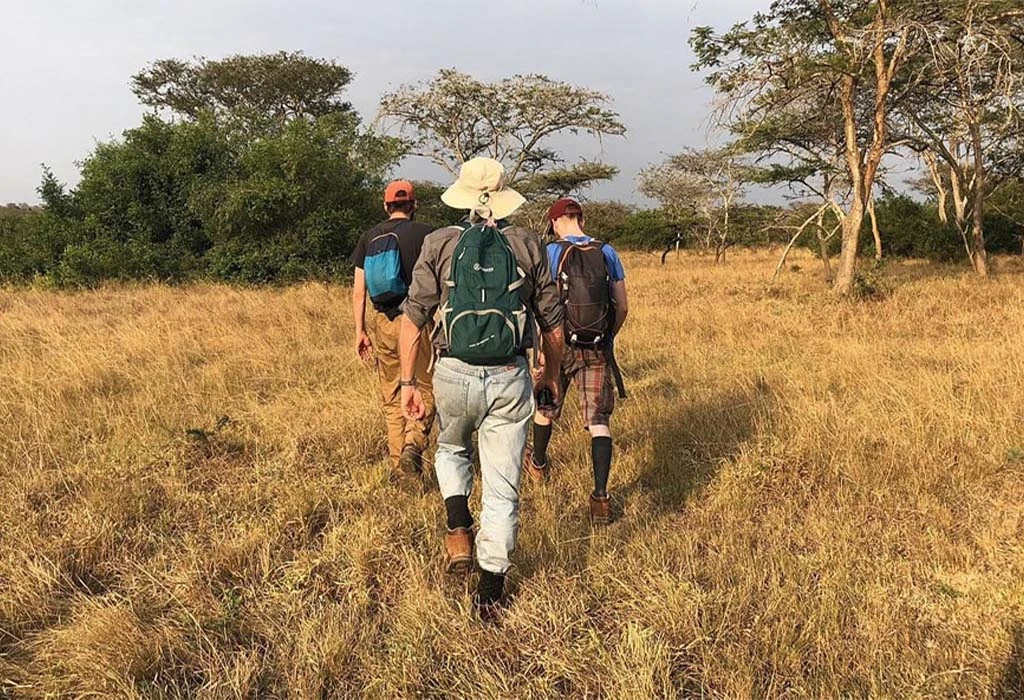
Group size also plays a key role. Walking in a small line of just a few people made the experience feel intimate and easy to manage. It was quiet, controlled, and far less intrusive to wildlife. At no point did it feel chaotic or overwhelming.
What You See on Foot
Walking through Lake Mburo offers a completely different perspective compared to a game drive. Without the hum of an engine, every sound becomes sharper the rustle of grass, the distant call of birds, even the soft thud of hooves.
During my walk, zebras grazed calmly in the distance while impalas darted gracefully across the plains. Elands, massive yet surprisingly gentle, moved slowly through the bush. However, the most unforgettable moment came when I saw giraffes at eye level. Standing there without a vehicle between us created a sense of connection that felt almost surreal.
At the same time, certain animals demand more caution. Buffalo, for example, can be unpredictable. Although we never got too close, the ranger pointed out their tracks and explained how he adjusts routes to avoid them. Similarly, hippos near the water require careful distance, especially since they can move quickly on land despite their heavy appearance.
What stood out most was how proactive the ranger remained. He didn’t wait for danger to appear; instead, he read the environment continuously and made small adjustments that kept us safe without interrupting the experience.
The Advantage of Open Terrain
Another reason walking safaris feel safe here lies in the landscape itself. Lake Mburo’s open savannah and rolling hills offer excellent visibility. You can often see animals from far away, which gives both you and the ranger time to react calmly.
This visibility also reduces the chances of sudden encounters. Unlike dense forests where animals might appear unexpectedly, the open terrain allows you to observe wildlife from a comfortable distance before deciding how to proceed.
Moreover, the ground is relatively easy to navigate. I didn’t have to worry about pushing through thick vegetation or climbing steep slopes. That made it easier to stay focused on the surroundings rather than watching every step.
Your Role in Staying Safe
Even with all these measures in place, your behavior matters. I quickly realized that the safest walks depend on cooperation between the ranger and the group.
Following instructions without hesitation is essential. At one point, the ranger quietly signaled us to stop. No explanation just a hand gesture. We froze instantly. Moments later, he pointed out movement in the distance that none of us had noticed. That small pause reminded me how critical it is to trust the guide completely.
Staying in formation also makes a difference. Walking in a single line keeps the group organized and minimizes noise. It may feel restrictive at first, but it quickly becomes second nature.
Clothing choices matter more than you might expect. Neutral colors help you blend into the environment, while sturdy shoes keep you comfortable on uneven ground. By the end of the walk, I appreciated every practical detail that had seemed minor at the start.
When to Go for the Best Experience
Timing can transform a good walk into an unforgettable one. Early mornings, when the air is cool and the park is just waking up, offer some of the best moments. Animals are active, and the soft light adds a magical quality to the landscape.
Late afternoons bring a similar energy. As temperatures drop, wildlife becomes more visible again, and the golden light creates a warm, peaceful atmosphere. In contrast, midday heat tends to slow everything down, making walks less comfortable and less rewarding.
The Bottom Line
Walking safaris in Lake Mburo National Park are not only safe but deeply rewarding when approached the right way. The absence of major predators, combined with skilled ranger guidance and open terrain, creates an environment where you can explore confidently.
More importantly, the experience changes how you connect with nature. You don’t just observe wildlife you become part of the landscape, even if only for a short time. And with the right precautions in place, that connection comes without unnecessary risk.