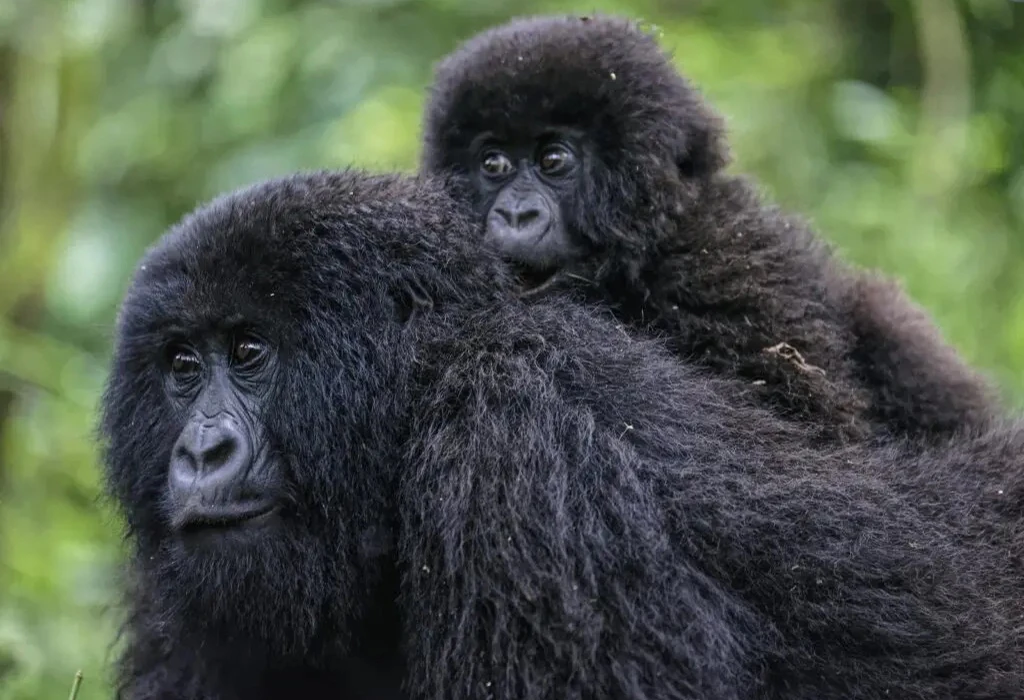


Few wildlife spectacles are as unforgettable as watching a silverback gorilla rise to his full height, draw in a deep breath, and begin beating his chest. The powerful sound echoes through the forest, leaving visitors both amazed and curious. At first glance, the display appears intimidating, and many people assume the gorilla is preparing to attack. In reality, chest beating is a sophisticated form of communication that serves several important purposes in gorilla society.
If you are fortunate enough to go gorilla trekking in Uganda’s Bwindi Impenetrable National Park or Rwanda’s Volcanoes National Park, you may witness this incredible behavior firsthand. Standing only a short distance from a massive silverback as he drums his chest is an experience that sends chills down your spine. Although the booming sound can make your heart race, experienced guides reassure visitors that chest beating is usually a message rather than a warning of an imminent attack.
At Experiya Tour Company, we believe that understanding gorilla behavior makes every trekking experience more meaningful. Knowing why gorillas beat their chests helps visitors appreciate these magnificent primates while respecting their natural instincts.
Chest Beating Is a Powerful Form of Communication
Unlike humans, gorillas do not rely on spoken language to communicate. Instead, they use body posture, facial expressions, vocalizations, and physical displays to express their intentions. Among these behaviors, chest beating is one of the most recognizable and effective.
When a gorilla beats his chest, he strikes it rapidly with cupped hands, creating a deep, resonating sound. The air sacs located near the gorilla’s larynx amplify the sound, allowing it to travel remarkable distances through dense forests. Researchers have found that these low-frequency sounds can carry hundreds of meters, making chest beating an excellent long-distance communication tool.
Rather than expressing only aggression, chest beating conveys different messages depending on the situation. It can signal dominance, confidence, excitement, location, or readiness to defend the group.
Establishing Dominance Within the Troop
One of the primary reasons silverback gorillas beat their chests is to reinforce their leadership.
A silverback serves as the head of the gorilla family. He protects females, cares for young gorillas, resolves conflicts, and guides the troop to food sources and safe resting places. Because his leadership is essential for the group’s survival, he must occasionally remind others of his strength and authority.
When another male approaches his family or attempts to challenge his position, the silverback often responds with a dramatic chest-beating display. Instead of immediately engaging in physical combat, he uses this powerful signal to demonstrate his size, confidence, and willingness to defend the troop.
In many cases, this display successfully prevents a fight. The rival male recognizes the silverback’s strength and chooses to retreat, allowing both gorillas to avoid potentially serious injuries. As a result, chest beating actually helps reduce violence among gorillas by resolving disputes before they escalate.
Demonstrating Strength Without Fighting
Although gorillas possess incredible physical strength, they generally avoid unnecessary confrontations. Their peaceful nature has earned them the nickname “gentle giants.”
Physical fights consume energy and carry significant risks. Even a victorious gorilla could suffer injuries that make it difficult to protect the family or find food. Consequently, natural selection has favored behaviors that allow gorillas to settle disagreements without resorting to combat.
Chest beating serves this purpose perfectly. The loud drumming communicates confidence and physical capability without requiring direct contact. It tells potential rivals, “I am strong enough to defend myself and my family,” while giving everyone an opportunity to back away peacefully.
This strategy benefits both individuals and helps maintain stability within gorilla populations.
Attracting Females During Courtship
Chest beating also plays an important role during the breeding season.
Female gorillas pay close attention to the confidence, health, and strength displayed by males. A silverback that produces loud, powerful chest beats demonstrates that he is physically fit and capable of protecting both mates and offspring.
Rather than relying solely on aggression, males often combine chest beating with confident posture, vocalizations, and calm movement during courtship displays. These behaviors showcase their maturity and leadership qualities, making them more attractive to females.
Therefore, chest beating is not always a sign of conflict. In many situations, it reflects confidence and reproductive fitness rather than hostility.
Young Gorillas Practice the Behavior
Chest beating is not limited to adult silverbacks. Younger males, known as blackbacks, frequently imitate the behavior as they mature.
Like human teenagers learning social skills, young gorillas practice chest beating to build confidence and understand social interactions. Their displays are often less powerful and less coordinated than those of fully grown silverbacks, but they gradually improve with age.
Through repeated practice, blackbacks learn how to communicate effectively, judge appropriate situations for displaying dominance, and gain valuable experience before eventually leading their own family groups.
Watching young gorillas experiment with chest beating provides fascinating insight into how social behaviors develop within gorilla communities.
Keeping the Family Together
Dense tropical forests often limit visibility to only a few meters. As gorillas spread out while feeding on leaves, shoots, fruits, and stems, family members can temporarily lose sight of one another.
In these situations, chest beating serves as an acoustic landmark.
The silverback’s drumming tells the rest of the troop exactly where he is. Females and younger gorillas can easily locate their leader by following the sound through thick vegetation. This simple yet effective communication helps the family remain connected even when visual contact becomes impossible.
Instead of shouting or calling constantly, the silverback uses chest beating as a natural location signal that travels efficiently through the forest.
Responding to Excitement and Emotion
Chest beating is not always connected to dominance or competition. Gorillas also perform this display when experiencing heightened emotions.
For example, a silverback may beat his chest after encountering another gorilla group, during moments of excitement, or while responding to unexpected activity nearby. The display communicates emotional intensity without necessarily indicating aggression.
Just as humans express emotions through gestures, facial expressions, or changes in voice, gorillas use chest beating as part of their rich behavioral language.
Every display reflects the specific context, making it important to observe the gorilla’s overall body language rather than focusing only on the chest beating itself.
Should Tourists Be Concerned?
Many first-time visitors worry when a silverback suddenly begins beating his chest during a gorilla trek. Fortunately, there is usually no reason to panic.
Habituated gorilla families have spent years becoming accustomed to the presence of carefully managed tourism groups. These gorillas generally recognize that visitors do not pose a threat when they follow established trekking guidelines.
A chest-beating display directed toward nearby tourists rarely signals an intention to attack. More often, the silverback communicates with members of his own family, responds to another gorilla group, or simply reinforces his leadership.
Professional guides closely monitor gorilla behavior throughout every trek. If a silverback appears uncomfortable or defensive, guides calmly instruct visitors on how to respond, usually by remaining quiet, avoiding direct eye contact, and allowing the gorillas sufficient space.
Following these instructions helps ensure safe and respectful wildlife encounters.
The Science Behind the Sound
Recent scientific research has revealed another fascinating detail about chest beating. Larger silverbacks produce deeper, lower-frequency sounds than smaller males. As a result, the chest beat provides reliable information about the gorilla’s body size.
Other gorillas can assess the strength and size of a potential rival simply by listening to the sound. This ability allows them to make informed decisions about whether to approach, challenge, or avoid another silverback.
In many ways, chest beating functions like an honest advertisement of physical condition, reducing uncertainty and preventing unnecessary conflicts.
An Unforgettable Experience in the Wild
Few wildlife encounters compare to hearing a silverback’s chest beat echo through the ancient forests of East Africa. The rhythmic drumming resonates across the landscape, reminding visitors that they are witnessing one of nature’s most intelligent and socially complex animals.
Rather than viewing the display as an act of aggression, understanding its meaning reveals the remarkable communication system that gorillas have developed over thousands of years. Every chest beat tells a story about leadership, family, confidence, courtship, or connection within the troop.
When you join a gorilla trekking adventure with Experiya Tour Company, you gain more than the opportunity to observe these endangered primates. You also discover the fascinating behaviors that make gorillas one of the world’s most extraordinary wildlife species. Watching a silverback beat his chest in the heart of Bwindi or Volcanoes National Park is not simply a thrilling moment—it is a rare glimpse into the language of one of humanity’s closest relatives, a memory that will stay with you long after you leave the forest.