
Interesting Facts About Mount Rwenzori
Interesting facts about Mount Rwenzori reveal one of Africa’s most extraordinary mountain ranges. Rising majestically along the border of Uganda and the Democratic Republic of Congo, these legendary peaks have fascinated explorers, scientists, nature lovers, and adventurers for centuries. Often referred to as the “Mountains of the Moon,” the Rwenzori Mountains stand as a remarkable testament to the beauty and power of nature.
Unlike Africa’s famous volcanic mountains, the Rwenzori range is non-volcanic and features permanent snow and glaciers despite being located near the equator. Furthermore, the mountains support unique vegetation, provide water to the Nile River system, and protect an incredible diversity of wildlife. For travelers seeking authentic wilderness experiences, Experiya Tour Company recommends Mount Rwenzori as one of East Africa’s most rewarding destinations.
The Legendary Mountains of the Moon
One of the most fascinating facts about Mount Rwenzori is its ancient nickname, the “Mountains of the Moon.” Around 150 AD, the famous geographer Claudius Ptolemy described a mysterious snow-capped mountain range deep within Africa and believed it was the source of the Nile River.
For centuries, these mountains remained hidden from much of the outside world. Consequently, many people doubted their existence because it seemed impossible for snow-covered peaks to exist so close to the equator. However, when explorers finally reached the region, they discovered that the stories were true.
Today, the name “Mountains of the Moon” continues to capture the imagination of visitors. The snow-covered peaks often emerge through thick clouds and mist, creating an almost magical appearance that seems straight out of a legend.
A Unique Geological Wonder
The Rwenzori Mountains differ significantly from other major mountains in East Africa. While Mount Kilimanjaro and Mount Kenya were formed through volcanic activity, the Rwenzori range was created by powerful tectonic movements.
Approximately three million years ago, massive blocks of ancient rock were pushed upward by forces within the Earth along the Western Rift Valley. As a result, the mountains rose dramatically above the surrounding landscape.
This geological process created a spectacular block mountain range composed mainly of ancient crystalline rocks such as granite and gneiss. These rocks are hundreds of millions of years old and provide valuable insights into Africa’s geological history.
Because of this unusual formation, the Rwenzori Mountains remain one of the most distinctive mountain systems on the continent.
Home to Africa’s Third-Highest Peak
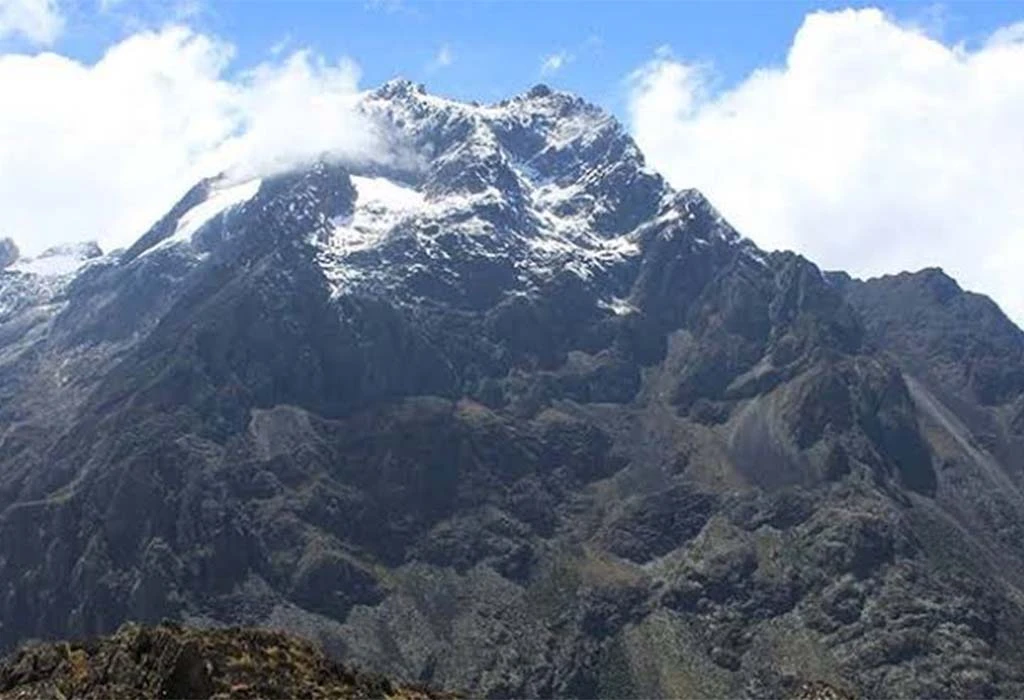
Mount Rwenzori boasts one of Africa’s highest summits. Margherita Peak, located on Mount Stanley, rises to an impressive elevation of 5,109 meters (16,762 feet) above sea level.
This makes it the third-highest point in Africa after Mount Kilimanjaro and Mount Kenya. Nevertheless, many mountaineers consider the Rwenzori trek more challenging than climbing Kilimanjaro because of the difficult terrain, muddy trails, glaciers, and unpredictable weather.
Equatorial Glaciers and Permanent Snow
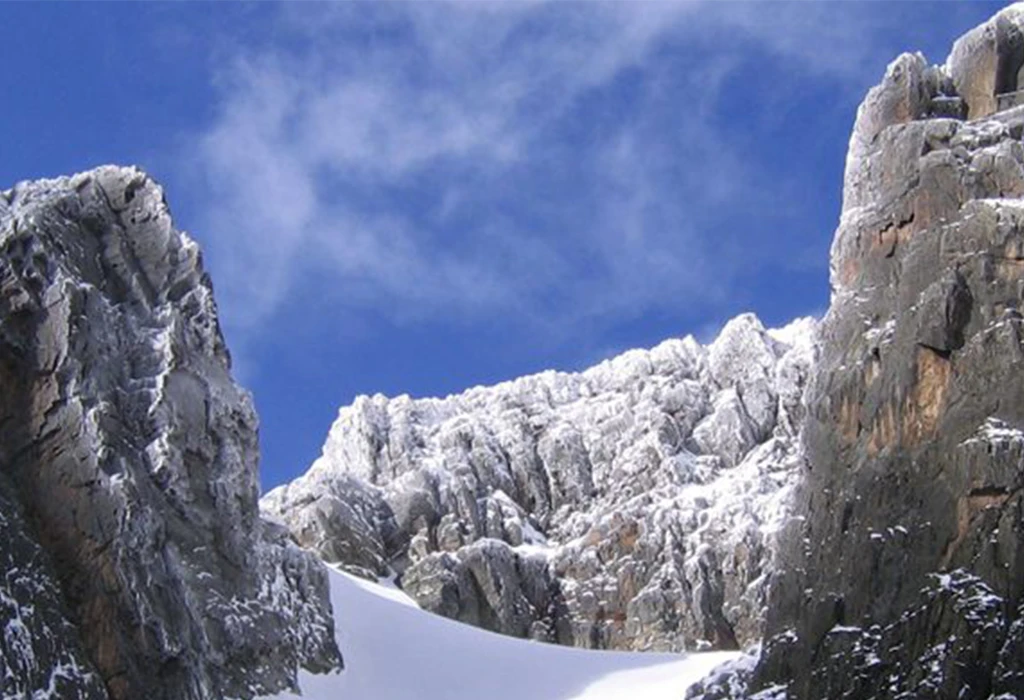
Perhaps the most surprising fact about Mount Rwenzori is the existence of glaciers near the equator. The Rwenzori Mountains are among the few places in Africa where permanent snow and ice can still be found.
The glaciers create a breathtaking contrast between tropical rainforests below and icy summit landscapes above. As visitors climb higher, they move through dramatically different environments within a relatively short distance.
 Unfortunately, climate change poses a serious threat to these glaciers. Over the past century, scientists have documented significant ice loss throughout the range. Many glaciers have shrunk dramatically, and some have disappeared completely.
Despite these challenges, the remaining glaciers continue to attract researchers and adventurers from around the world who wish to witness this rare natural phenomenon.
A Botanical Wonderland
The Rwenzori Mountains are often described as one of the world’s most unique botanical regions. As trekkers ascend through the various vegetation zones, they encounter landscapes unlike anywhere else on Earth.
The lower slopes are covered with dense tropical forests filled with towering trees, colorful flowers, and abundant wildlife. Higher up, bamboo forests dominate the scenery before giving way to the extraordinary Afro-alpine zone.
Here, giant lobelias rise several meters into the sky, while enormous groundsels resemble prehistoric trees. Thick mosses and lichens drape the vegetation, creating an otherworldly environment.
These remarkable plants have evolved specialized adaptations that allow them to survive freezing nighttime temperatures, intense sunlight, and constant moisture. Consequently, the alpine zone appears more like a scene from a fantasy world than a mountain ecosystem.
A UNESCO World Heritage Site
The exceptional ecological importance of the Rwenzori Mountains earned international recognition when UNESCO designated Rwenzori Mountains National Park as a World Heritage Site in 1994.
The park protects a vast range of habitats that support an incredible variety of species. In addition, the mountains form part of the Albertine Rift, one of Africa’s most important biodiversity hotspots.
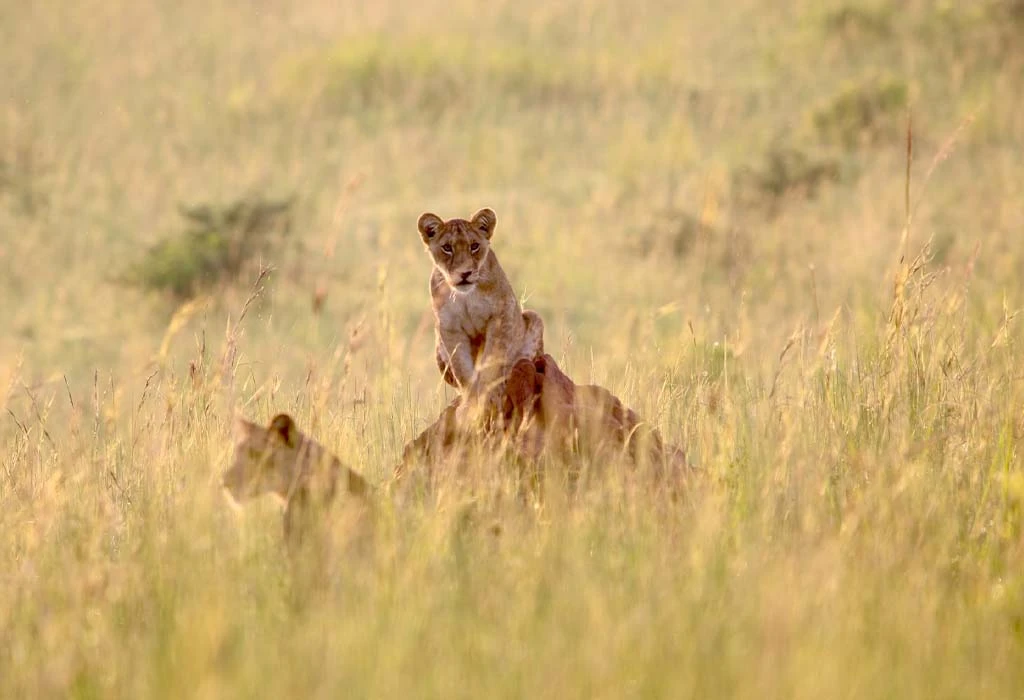
Scientists have recorded more than 70 mammal species within the park. These include forest elephants, chimpanzees, giant forest hogs, and the rare Rwenzori black-fronted duiker.
Bird enthusiasts are equally rewarded, with over 217 bird species inhabiting the region. Many of these birds are endemic to the Albertine Rift and cannot be found elsewhere in the world.
The mountains also provide habitat for fascinating reptiles and amphibians, including the colorful three-horned chameleon that thrives in the cool montane forests.
An Important Source of the Nile River
For centuries, explorers searched for the source of the Nile River. Interestingly, the Rwenzori Mountains play an important role in feeding this legendary waterway.
The mountains receive exceptionally high rainfall throughout the year. Combined with glacial meltwater, this precipitation forms numerous rivers and streams that flow down the slopes.
These waters eventually enter Lakes George, Edward, and Albert before contributing to the White Nile system. Therefore, the Rwenzori range serves as one of the important water sources supporting the Nile River.
Moreover, the mountains provide freshwater to millions of people living in Uganda and the Democratic Republic of Congo. Agriculture, fishing, and daily life across the region depend heavily on this vital water supply.
Because of their ability to capture and store moisture, the mountains function as a natural water tower for East Africa.
One of Africa’s Greatest Trekking Adventures
For adventure seekers, Mount Rwenzori offers one of Africa’s most rewarding trekking experiences. Unlike some of the continent’s more crowded destinations, the Rwenzori Mountains remain relatively untouched.
Each year, only a small number of visitors attempt the journey to the high peaks. Consequently, trekkers enjoy a genuine wilderness experience characterized by solitude and spectacular scenery.
The climb involves navigating muddy trails, crossing rivers, ascending steep slopes, and traversing glacial terrain. Reaching Margherita Peak requires technical mountaineering skills, including the use of ropes, crampons, and ice axes.
Weather conditions can change rapidly, adding an extra layer of challenge. Nevertheless, those who reach the summit are rewarded with unforgettable views of glaciers, alpine valleys, and distant African landscapes.
Experiya Tour Company often recommends the Rwenzori trek to experienced hikers seeking a more adventurous alternative to traditional mountain climbs.
Cultural and Spiritual Importance
Beyond their natural beauty, the Rwenzori Mountains hold profound cultural significance for the local Bakonzo and Bamba communities.
For generations, these communities have regarded the mountains as sacred places associated with ancestral spirits and divine powers. Traditional beliefs continue to shape the relationship between local people and the surrounding environment.
The name “Rwenzori” is often interpreted as meaning “Rain Maker” or “Cloud King,” reflecting the mountains’ influence on local weather patterns and their almost constant cloud cover.
Today, local communities play an essential role in conservation and tourism activities. Many residents work as guides, porters, and conservation partners, sharing valuable indigenous knowledge while supporting sustainable tourism initiatives.
This collaboration helps preserve both the cultural heritage and ecological integrity of the region for future generations.
Conclusion
Interesting facts about Mount Rwenzori highlight why this remarkable mountain range remains one of Africa’s greatest natural treasures. From its legendary status as the Mountains of the Moon to its snow-capped peaks, ancient glaciers, giant plants, diverse wildlife, and cultural significance, the Rwenzoris offer a truly unique experience.
Whether you are a nature enthusiast, mountaineer, photographer, or cultural traveler, the Rwenzori Mountains provide unforgettable adventures and discoveries. Their extraordinary beauty, rich biodiversity, and fascinating history continue to inspire all who venture into this magical corner of East Africa.